
Dr. Jenny Gandhi

procedure steps

1. Vascular Access and Patient Preparation

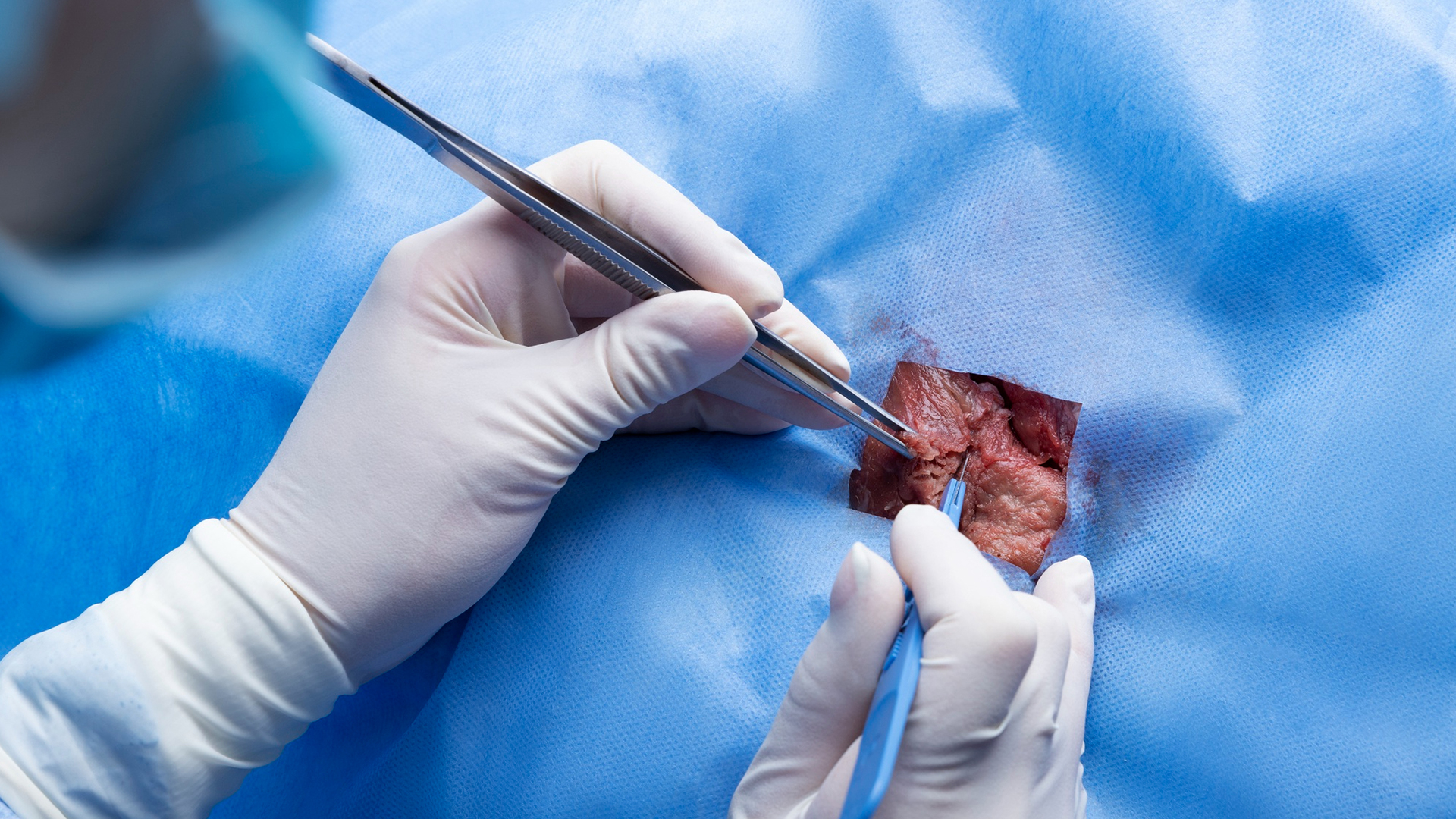
Vascular access is usually achieved through the femoral artery under sterile settings. Depending on the situation, either general anesthesia or sedation is given.
2. Navigation of the Catheter to the Target Vessel

A microcatheter is carefully guided through the artery system to the location of the lesion that has to be embolized using fluoroscopic guidance.

3. Superselective Catheterization

To maximize the accuracy of embolic agent distribution, the microcatheter is placed as close to or inside the target vessel or nidus of the arteriovenous malformation (AVM).

4. Embolic Agent Preparation

Onyx (ethylene vinyl alcohol copolymer) or n-butyl cyanoacrylate (NBCA) glue is made. While glue quickly polymerizes when it comes into contact with blood, onyx is a non-adhesive liquid embolic agent dissolved in dimethyl sulfoxide (DMSO).

5. Controlled Embolic Agent Injection

For Onyx: Under continuous fluoroscopy, the embolic agent is administered slowly to enable for a slow precipitation and solidification that forms a cast that blocks the vessel.

6. Observing While Injecting

To prevent non-target embolization, the operator keeps a close eye on the degree of embolic agent penetration. Injection is stopped or the microcatheter is moved if reflux or excessive proximal filling happens.

7. Final Angiography

Angiography verifies the successful blockage of the target vessels or nidus following embolization while maintaining flow in non-target arteries.

8. Hemostasis and Microcatheter Removal

With caution, the microcatheter is removed. Closure devices or manual compression are used to produce access site hemostasis.

disease treated

Brain Arteriovenous Malformation

Lorem Ipsum is simply dummy text of the printing and typesetting industry.

Cerebral/venous Sinus Thrombosis

Lorem Ipsum is simply dummy text of the printing and typesetting industry.

Spinal Vascular Malformation

Lorem Ipsum is simply dummy text of the printing and typesetting industry.

Dural Arteriovenous Fistulas

Lorem Ipsum is simply dummy text of the printing and typesetting industry.

Intracranial Hemorrhage Of Unknown Etiology

Lorem Ipsum is simply dummy text of the printing and typesetting industry.

suitable for

Hypervascular Lesions and Vascular Tumors

used to lessen the risk of bleeding in hypervascular lesions or devascularize tumors prior to surgery.

Hemorrhages in Arteries

management of arterial bleeding, such as peripheral or gastrointestinal hemorrhages.

Visceral and Peripheral Vascular Damage

Off-label use for angiomyolipomas, varicocele, aneurysm embolization, type II endoleaks following aortic repair, and other peripheral vascular abnormalities.

When Accurate, Managed Embolization Is Required

Onyx is used for embolizing high flow lesions and situations where catheter stability and reflux control are crucial because of its non-adhesive, gradual polymerizing qualities.

benefits

Safety and Controlled Delivery

Because onyx is viscous and non-adhesive, it can be injected slowly and carefully, lowering the danger of catheter adhesion and unintended embolization. Although glue polymerizes quickly, it works particularly well in intranidal aneurysms and relatively small vessels.

Occlusion of Complex Lesions with Effectiveness

Larger areas of the lesion can be occluded in a single session thanks to Onyx’s greater penetration into the nidus of AVMs. For some intranidal aneurysms where catheter access is restricted, glue may be preferable.

Decreased Process Time and Enhanced Visualization

Because Onyx’s radio-opacity enables continuous visibility during injection, operators can accurately monitor embolization to prevent complications. This makes embolization safer and more thorough.

Adaptability to Different Lesions

Compared to earlier embolics, these drugs offer more treatment options with less risks for brain AVMs, dural arteriovenous fistulas, vascular tumors, and peripheral lesions.

Reduced Inflammatory Reaction and Issues

Compared to glue, onyx causes less vascular inflammation and vessel wall damage, which improves patient tissue tolerance and may result in fewer problems.

Capacity to Stop and Start Embolization

Compared to quick polymerizing glue, onyx makes the process safer and more flexible by enabling the operator to pause injections without catheter trapping.

Better Results

Research indicates that the combination or selective use of these medications improves the overall prognosis of patients by achieving greater cure rates for AVMs and fistulas with minimal morbidity and mortality.

post-treatment recovery

Hospitalization and Observation
After elective embolization, patients usually remain in the hospital for one to two days.
If there has been recent bleeding, longer stays can be necessary. Neurological examinations and imaging to identify problems like bleeding or infarction are part of the monitoring.
Typical Symptoms Following Procedures
Because of the Onyx solvent's metabolism, patients may have headaches, nausea, and a distinctive garlic-like smell for 24 to 48 hours.
Painkillers are used to treat common tenderness at the catheter insertion site, which is typically the groin.
Engagement and Attention
To enhance circulation, early mobilization is advised. To prevent bleeding or infection, the vascular access site must be well cared for.
Patients are urged to strictly adhere to medication instructions, particularly if they are getting ready for radiosurgery or another surgery.
Subsequent Therapies
Days to weeks after embolization, additional therapies like surgery or radiosurgery may be planned, depending on the reduction in lesion size and clinical state.
Neurological Healing
The degree of embolization and the initial neurological state determine improvement.
Although they normally go away in a few weeks, neurological impairments brought on by embolization or sequelae need careful monitoring.
Extended Monitoring
To evaluate lesion obliteration and identify recurrence, routine imaging (MRI/angiogram) is performed.
Based on follow-up results, further embolization or treatments might be necessary.

Schedule Your
Consultation Today!