

Dr. Jenny Gandhi

procedure steps

1. Patient Preparation

Detailed imaging (CT, MRI, angiography) is used in pre-procedural evaluation to evaluate the size, location, and vascular anatomy of aneurysms. To lower the risk of thromboembolism, dual antiplatelet therapy (aspirin and clopidogrel) is initiated several days before the surgery.

2. Placement of Catheters and Vascular Access

The femoral artery is typically used to gain vascular access when under general anesthesia. In the parent artery that supplies the aneurysm, a guiding catheter is inserted proximally.

3. Navigation of Microcatheters

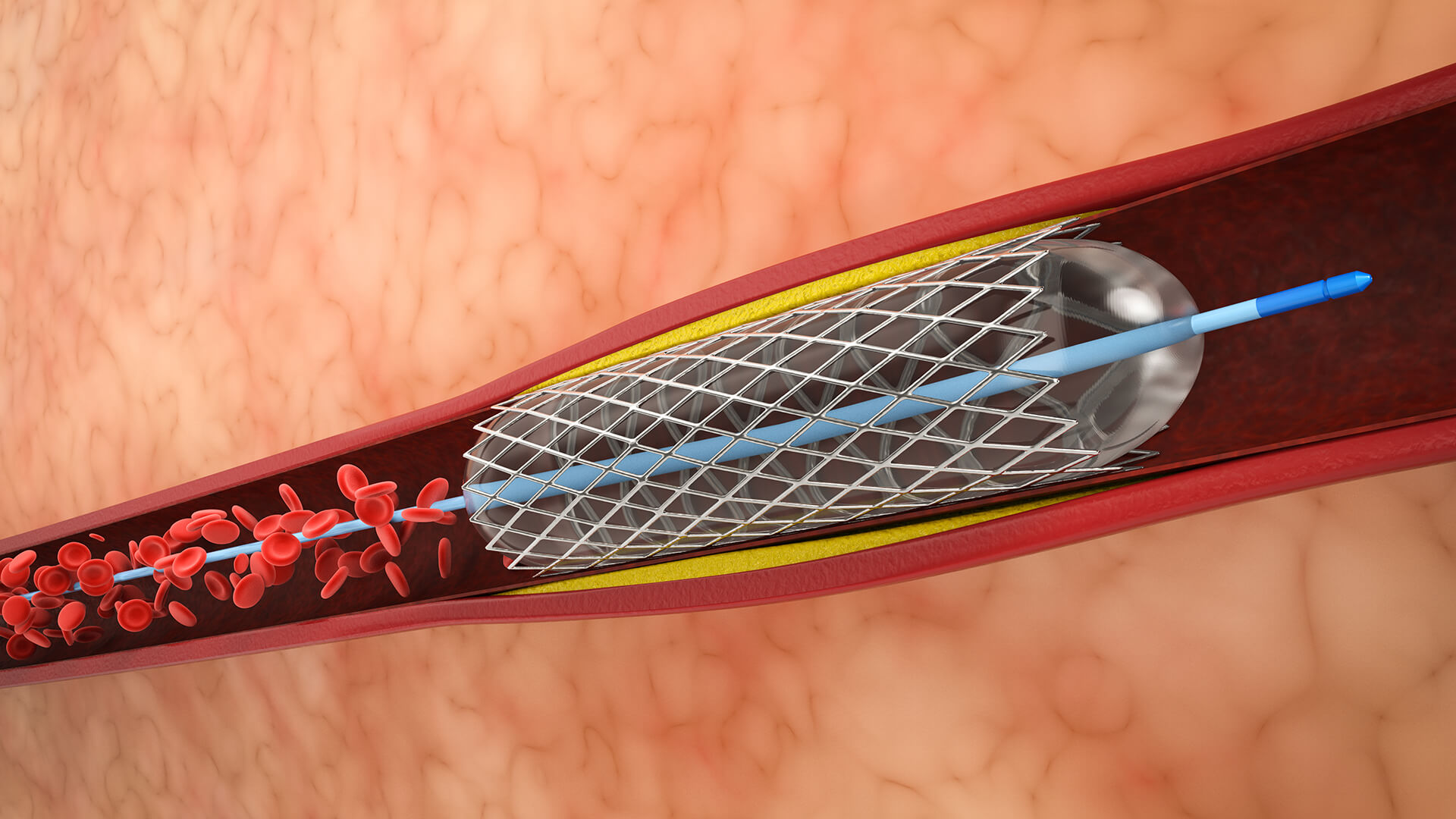
In order to deliver the flow-diverting stent device, a microcatheter is advanced distal to the aneurysm neck over a microguidewire.

4. Sizing and Selection of Devices

The targeted landing zones and parent vascular diameter determined by 3D angiography are used to determine the size of the flow diverter stent (FDS).

5. Deployment of Flow Diverters

Unsheathing the stent from the microcatheter allows the flow diverter to be carefully and slowly deployed over the aneurysm neck, guaranteeing full wall apposition without overly obscuring vital branch or perforator arteries.

6. Deployment of Flow Diverters

Unsheathing the stent from the microcatheter allows the flow diverter to be carefully and slowly deployed over the aneurysm neck, guaranteeing full wall apposition without overly obscuring vital branch or perforator arteries.

7. Optional Adjunctive Coiling

Coils may occasionally be inserted inside the aneurysm sac to hasten thrombosis and offer instant protection, particularly in situations of big or ruptured aneurysms.

8. Verification and Imaging

Angiography is used to verify the location of the device, the apposition of the vascular wall, and the change in flow across the aneurysm. Proper placement is confirmed by many angiographic views.

9. Hemostasis and Catheter Removal

Access site hemostasis is ensured, and all catheters and wires are gently removed.

10. After-Procedure Administration

To avoid stent thrombosis, dual antiplatelet therapy must be continued. Patients' neurological condition and any problems, such as bleeding or artery obstruction, are tracked.

11. Follow-up

Aneurysm thrombosis, vascular remodeling, and flow diverter patency are evaluated by routine imaging follow-up (angiography, MRI) every six months to a year.

disease treated

Spinal Vascular Malformation

Lorem Ipsum is simply dummy text of the printing and typesetting industry.

Brain Aneurysm

Lorem Ipsum is simply dummy text of the printing and typesetting industry.

suitable for

Large, enormous, or wide-necked cerebral aneurysms

Large, enormous, or wide-necked cerebral aneurysms, particularly those that are challenging to clip or coil.

Fusiform, dissecting, blister-like, and bleeding blister-like aneurysms

Fusiform, dissecting, blister-like, and bleeding blister-like aneurysms that are difficult to cure technically or entail a significant risk.

Recurrent aneurysms following prior surgical

Recurrent aneurysms following prior surgical or coiling procedures.

Sidewall aneurysms that can be placed with a flow diverter

Sidewall aneurysms that can be placed with a flow diverter are usually found in the internal carotid artery or other large vessels.

Because of the size of the vessel and the involvement of branches

Because of the size of the vessel and the involvement of branches, choose distal or bifurcation aneurysms with greater caution.

Following stent implantation

Following stent implantation, patients must be able to tolerate dual antiplatelet medication.

Situations in which both aneurysm occlusion and parent vessel

Situations in which both aneurysm occlusion and parent vessel repair are desired.

benefits

Effective for complicated aneurysms that are challenging to treat with conventional clipping or coiling, such as massive, huge, wide-neck, fusiform, blister, and previously treated recurrent aneurysms.

By rerouting blood flow away from the aneurysm sac while maintaining the parent vessel and other branches, it encourages progressive aneurysm thrombosis.

Provides an endovascular scaffold that promotes neointimal growth throughout time, facilitating vessel wall regeneration.

Achieves high rates of total aneurysm occlusion; recent investigations have indicated occlusion rates of 70–80%.

Procedure duration and complications have decreased due to improved safety profiles brought about by technological developments and operator expertise.

Enables the treatment of aneurysms in distal vessels as well as anterior and posterior circulations.

Lowers the chance of aneurysm rupture following therapy because thrombosis occurs gradually as opposed to suddenly.

post-treatment recovery

Early Recovery and Hospital Stay
After being monitored for any acute issues, such as bleeding or neurological abnormalities, the majority of patients are released the day following the treatment.
In order to give the artery access site, typically the groin or wrist, time to heal, patients are recommended to rest and refrain from physically demanding activities for around five days.
Limitations on Activities
For the first one to two weeks, patients should refrain from rigorous activity, heavy lifting, and intense exercise.
During the early stages of recuperation, mild headaches and exhaustion are possible, although they usually go away with time.
Medications
To prevent stent thrombosis, dual antiplatelet medication (aspirin and clopidogrel) must be started prior to the procedure and continued for several months after.
During recuperation, taking medications as prescribed is essential.
Imaging Follow-Up
Since complete aneurysm closure normally develops gradually over this time, aneurysm occlusion and device patency are monitored via imaging (angiography or MRI) at intervals, often 6 weeks to 6 months post-procedure.
Extended Recuperation
Over several months, vascular repair and energy levels keep getting better.
Most patients resume their regular activities after two to four weeks, although they will require ongoing imaging and clinical monitoring for years to come.
Monitoring Complications
Patients are kept under observation for indications of bleeding, ischemic episodes, or in-stent stenosis.
In the event of issues, prompt action is essential.

Schedule Your
Consultation Today!