
Dr. Jenny Gandhi

procedure steps

1. Preparation and Assessment

To determine arterial blockages and appropriateness, the patient gets a pre-procedure evaluation that includes blood tests, an ECG, and angiography.

2. Site of Access and Local Anesthesia

Local anesthetic is given at the access site, which is typically the groin (femoral artery) or wrist (radial artery), under sterile conditions. An introducer sheath is inserted after a little puncture is formed.

3. Insertion and Navigation of Catheters

The constricted artery segment is reached by inserting a thin, flexible catheter through the sheath and guiding it under real-time fluoroscopy.

4. Placement of Guidewires

To act as a rail for the delivery of the device, a guidewire is passed via the catheter and advanced across the lesion.

5. Deployment of Stents

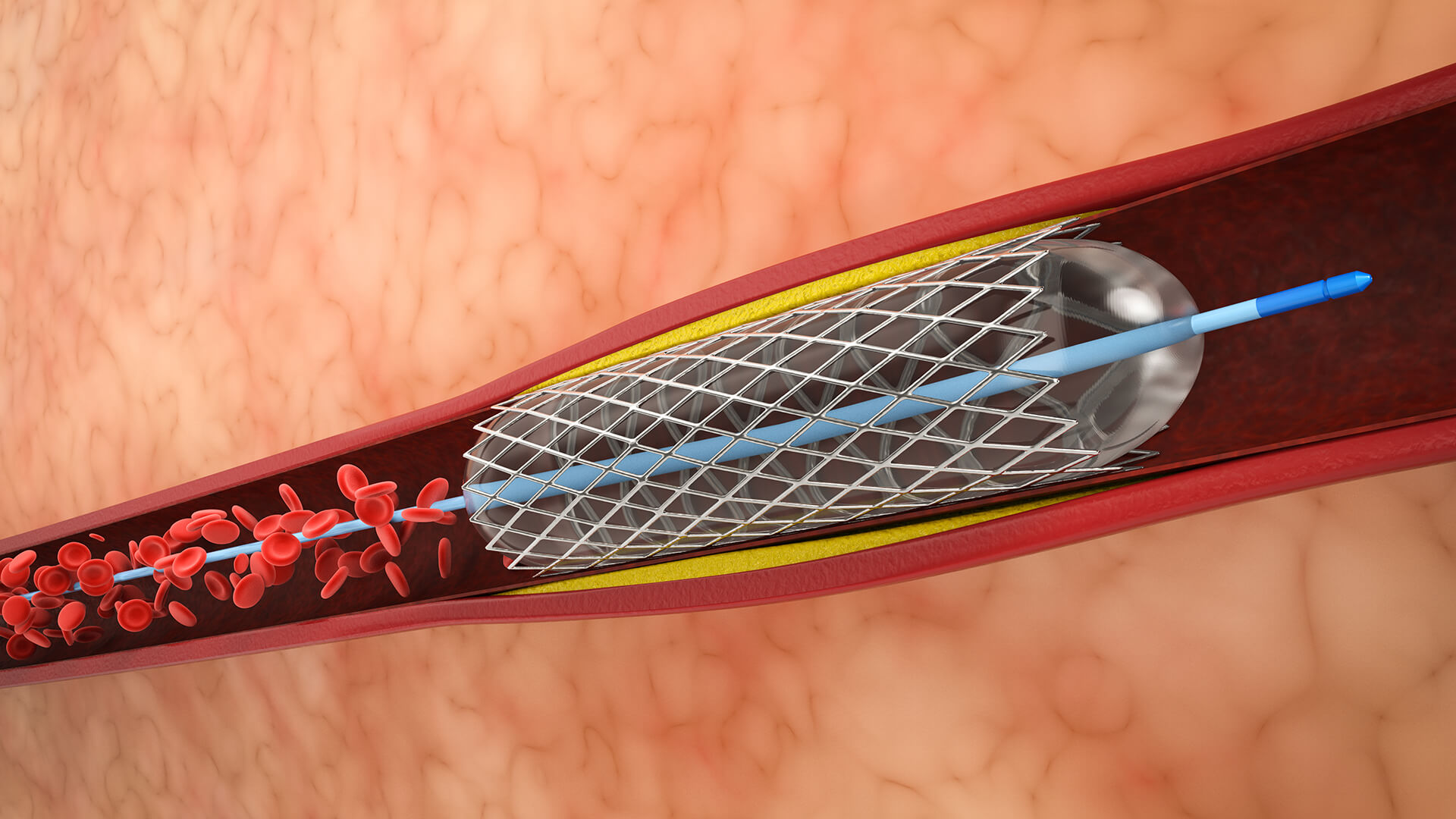
When the balloon inflates, the stent expands, latches into the artery wall, and offers structural support to stop restenosis.

6. Deflating the balloon and removing the catheter

The stent is left permanently in place when the balloon is deflated and removed. After that, the sheath and catheter are taken out.

7. Last Angiography

To verify the placement of the stent, the patency of the conduit, and the lack of problems, contrast dye is injected.

8. Hemostasis

To stop bleeding, sealing devices or pressure are administered to the puncture site. After that, the patient's vital signs and access site problems are observed.

disease treated

Peripheral Arterial Occlusive Disease

Lorem Ipsum is simply dummy text of the printing and typesetting industry.

Renal Artery Stenosis

Lorem Ipsum is simply dummy text of the printing and typesetting industry.

May-thurner Syndrome

Lorem Ipsum is simply dummy text of the printing and typesetting industry.

suitable for

Individuals with Severe Artery Blockages

When medicinal therapy is insufficient, it is appropriate for those with severe coronary artery constriction or blockages that cause angina, dyspnea, or an increased risk of heart attack.

Individuals with Unstable or Acute Angina

Perfect for individuals with acute coronary syndromes, when early arterial opening can enhance survival and avoid tissue damage.

Patients Following Myocardial Infarction (Heart Attack)

Stenting the culprit artery improves long-term results and lowers the likelihood of re-occlusion in patients with recent MI.

Individuals with Multiple Vascular Diseases

It is appropriate when several arteries are severely constricted and revascularization is necessary to alleviate symptoms and improve survival.

Candidates with high ischemic risk and good general health

Candidates must have an appropriate artery diameter (often greater than 2 mm), be free of contrast dye allergies, and not have any contraindications, such as bleeding disorders.

Patients with Medication-Uncontrollable Stable Angina

Stenting can greatly enhance quality of life by lowering anginal symptoms when lifestyle and medication changes don’t work.

benefits

Enhances Blood Flow

By keeping constricted or blocked arteries open, stents enhance blood flow to the heart muscle and lessen symptoms like angina (chest discomfort) and dyspnea.

Lowers the Chance of a Heart Attack

Stenting greatly increases survival in acute coronary syndromes and heart attacks by rapidly restoring blood flow and limiting damage to the heart muscle.

A Less Invasive Option to Surgery

Compared to coronary artery bypass grafting (CABG), stenting is less invasive, requires fewer incisions, and typically results in a quicker recovery and less discomfort.

Quick Symptom Reduction

Following the operation, patients frequently report greater exercise tolerance and quick alleviation from angina symptoms.

Reduced Hospital Stay and Fast Recuperation

After open heart surgery, many patients are discharged from the hospital in 1-2 days and resume their regular activities sooner.

Enhances Life Quality

Stents let patients resume their regular physical activities and enhance their quality of life by reestablishing blood flow and reducing symptoms.

Can Minimize the Need for Bypass Surgery

Stenting may be able to prevent more invasive surgical procedures in some situations.

post-treatment recovery

Quick Recuperation and Hospitalization
After the procedure, the majority of patients are checked for vital signs and access site issues like bleeding for a few hours to a day.
Depending on their condition, many patients can return home the same day or after staying overnight.
Exercise and Wound Care
For 24 to 48 hours, keep the area where the catheter was inserted dry and clean.
For approximately a week, or as directed by your physician, refrain from driving, hard lifting, and severe activity.
Early, light walking is advised to improve circulation and avoid blood clots.
Compliance with Medication
To avoid stent thrombosis and guarantee appropriate healing, dual antiplatelet therapy, such as aspirin plus clopidogrel is crucial.
Patients should attend all follow-ups and adhere to their prescription schedule.
Recovery Timeline
If their jobs are not physically demanding, the majority of patients can resume their regular daily activities and employment in one to two weeks.
To maximize heart health and lower future risk, complete cardiovascular rehabilitation is advised over a period of weeks to months.
Depending on general health and comorbidities, emergency stenting following a heart attack may necessitate a longer recuperation period.
Long-Term Monitoring
Monitoring stent function, heart health, and drug effects requires routine follow-up appointments.
Long-term results are supported by lifestyle modifications such eating a balanced diet, exercising, and quitting smoking.

Schedule Your
Consultation Today!